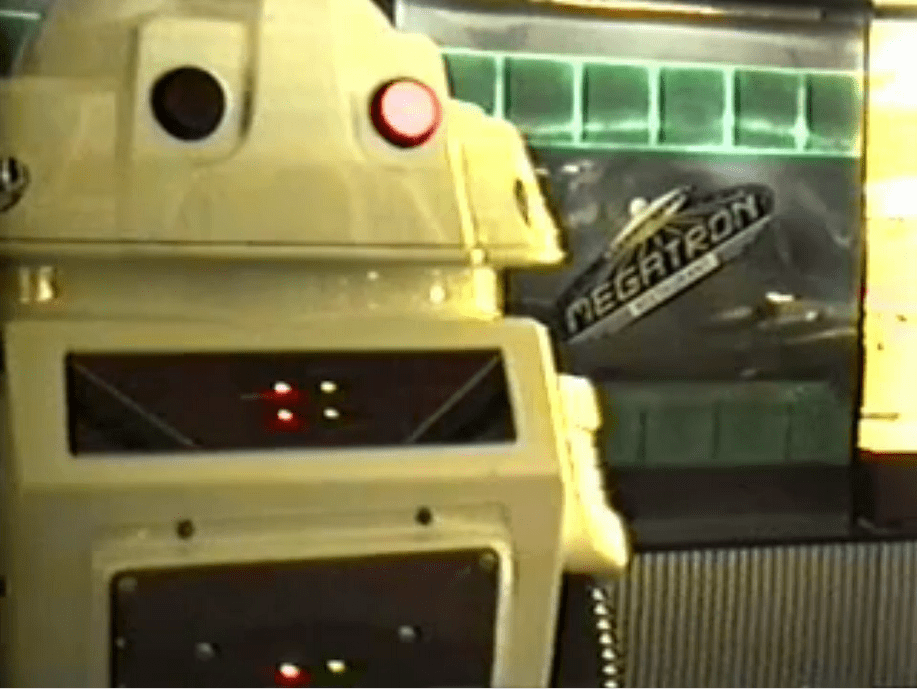
I recently had the pleasure of interviewing Catherynne M. Valente about her new novel, Space Oddity (read the main interview here). In this exclusive additional content, I ask her about the Megatron flying saucer restaurant, a once-real venue that now appears as a central plot device in the book. I first spoke to Catherynne when she was researching the book and contacted me asking about the Megatron. I am enormously thankful to have been able to make even a minor contribution to her work.
The Megatron was the brainchild of Danny Blundell, who opened the sci-fi themed restaurant in 1990. It was ambitious for its time, featuring touchscreen ordering, laser shows, and staff dressed as aliens and robots. Large overheads caused the business to close in 1992. It reopened the following year as a McDonald’s, with much of what made it special stripped out. After the McDonald’s closed in the early 2000s, the building lay derelict for several years. Despite attempts to have it listed, it was demolished in 2008.
TC: One thing that strikes me about the Megatron is the juxtaposition of sparkling, 1950s futurism on the one hand and British naffness on the other. The receipts jammed in the machines, the roof leaked, and when fat was poured down the drains the sewers backed up all the way to the neighbouring village. Looking at science fiction, I think of Ridley Scott’s vision of a Los Angeles where it never stops raining, or the parochial apocalyptic fiction of H.G. Wells and John Wyndham. Was that part of its appeal, the idea that the Megatron time machine would malfunction or not work as intended? Or the contrast between outlandish sci-fi imagery and grey skies?
CV: Yeah, absolutely. There are a couple of things that appeal to me about it: 1) it’s literally a spaceship, but 2) it’s such an interesting combination of genuinely futuristic technology, like touchscreens in 1990, this is the future. It’s so everyday to us now. I’ve always been interested in that process by which something that is totally mind-blowing becomes “This stupid thing doesn’t work” within a very short amount of time. And this all fits so well with the aesthetic of Decibel Jones and their whole thing.
This book came very close to being dedicated to Danny Blundell, it’s just that two important deaths in my life took precedence. But building something incredibly stupid because you just have this idea inside you that you just can’t shake, I will always respect that. I will always love that. It is what I do with words. To just build this thing in the middle of a field, it’s so cool and so dumb and so wonderful, like this completely bizarre idea that somehow comes all the way round to being sublime. It was just so perfect.
Then there was the real risk that this is a real thing that existed, that I didn’t experience and cannot experience now, but certainly some people did. This book will be coming out in the UK. I don’t want to screw it up. And, as you know, some information is easy to find and some isn’t. You sent me pictures of menus at one point, and I was like “Oh, thank God,” because I wanted to have the food, but without a menu and seeing what was on offer, you’re going to screw that up. With the star-shaped chips, I was like, “Yes, yes, perfect.” It was so exciting because the vibe of it was exactly the same. It is a plucky, ragtag band of weird stuff coming together to occasionally serve fast food.
TC: I often think about how the Megatron relates to nostalgia and hauntology, the idea that we’re haunted by futures that might have been, from faded memories of children’s birthday parties to the false promises of the Space Age. Your use of the Megatron in Space Oddity taps into those feelings very effectively. Can you tell us a little something about that?
CV: There’s a bit in the first book [Space Opera] that says that every culture’s central starship design reflects who they are as a species, so this aquatic species has this organic, floating coral reef type of ship. The Keshet species are timestream jumpers. They jump through timestreams constantly. It’s part of what they are. Essentially, the idea is that a captain of a ship like this is supposed to go through years of vigorous mental training to hold the entire architecture of the ship in their mind. Their mind imprints on it when they take control of the ship and it’s propagated with all of the things they were thinking about at the time, from timestreams where those things existed.
This is a very powerful technology, and they handed it over to a not-at-all-sober glam rocker who’s coming up on 60 years old, and he was thinking about a million and four stupid things all at once and that’s what this ship propagates with. One of the things he was thinking about was how he got obsessed with this restaurant in the 90s, and his grandmother wouldn’t take him and wouldn’t take him and wouldn’t take him, and he ended up going once and he was thinking about how good that tasted and what happened to Jimmy Page’s guitar and all of this random other stuff. That’s how this completely bonkers ship gets put together.
The bridge is this restaurant, and it ends up being an echo of the past. Then, in the climax of the book, this location becomes key to solving the problem. The thing is that, in our own memories, things do tend to layer like that. It’s not just a funny idea, we’re all thinking about a million things at once. This is exactly what would happen if I were given a ship like that, it would be a total disaster. But in working through our own issues, we work through the layers of our memories, and a lot of what we do when we’re in crisis and try to make our lives better is to create things that would have helped our child selves. I don’t want to get too American with it, but we never get over our childhood wounds. Nobody came to Dess’s birthday party at the Megatron, which is painful, but hardly the most painful thing that ever happened to him. It’s a minor wound that becomes the key to a lot of things.
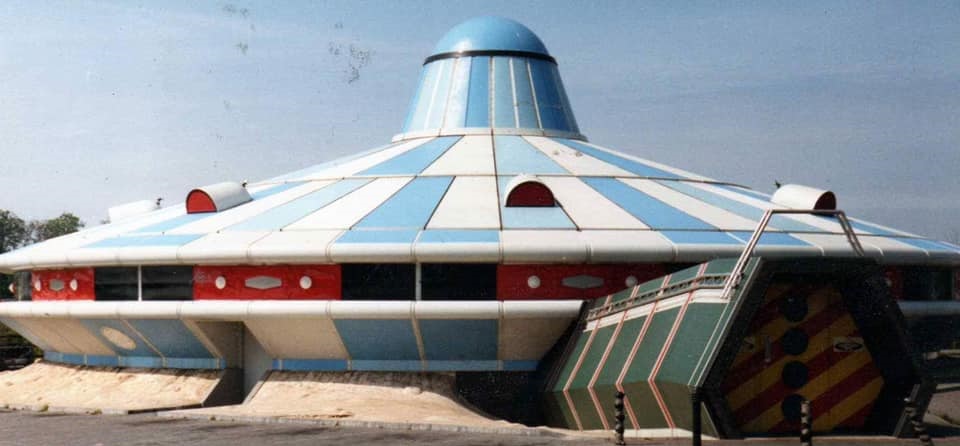
And it is a very haunted place. The people who are there are people who now may be dead or much older. Coincidences start to compound towards the end of the book, so they actually meet some of the people who are in the Megatron during the hour that is being recycled constantly inside the ship. It becomes this forward and backwards echo of both loss and, as you say, nostalgia, but it’s also that disappointment in the future that we so often express. People say, “Where’s my flying car?” That’s always bothered me. You don’t want a flying car, or you do, but you don’t want anyone else to have one. You’ll never see the sky again, it will be terrible, and it will land in your front yard. But there is this retrofuture that we imagine, particularly in the early 90s as the Cold War ended and people with a straight face talked about the end of history and that everything was just going to be fun from now on. Cool prediction, guys.
It felt very emotionally honest that, once that science-fictional future does arrive, you think a lot about what people thought it would be like, and what is better and what is worse. It made total sense to me, especially as someone who is advanced into middle age. That’s what I’ve always liked about Dess, having a swaggering, heroic person who’s 56 or something like that. It’s definitely kept vague how old Dess is. But, at that age, you start thinking about how things might have been, and to him the Megatron is the symbol of all that because it seemed so amazing when he was a kid. He didn’t see the leak in the ceiling and the receipts getting jammed. All he saw was the cool, wonderful silver of the perfect future where everything would be like this, and now he can leave the planet and sail through the stars and it’s a bit shit, a bit rubbish. It all seemed to go together so perfectly.
It also seemed to reflect a little bit of the relationship between an author and a reader. The reader also doesn’t see the drippy ceiling and the jammed receipts, or that I had Covid, or that half my family died. They don’t see any of that. They see the future that I’m showing them, but I am trying to hold the water out with one hand up on the ceiling, and pulling the receipts, and trying to fix the fryer, doing a million things at once, trying to keep this janky thing moving, but from the other side it’s just blue lights and cool tones. Hopefully.
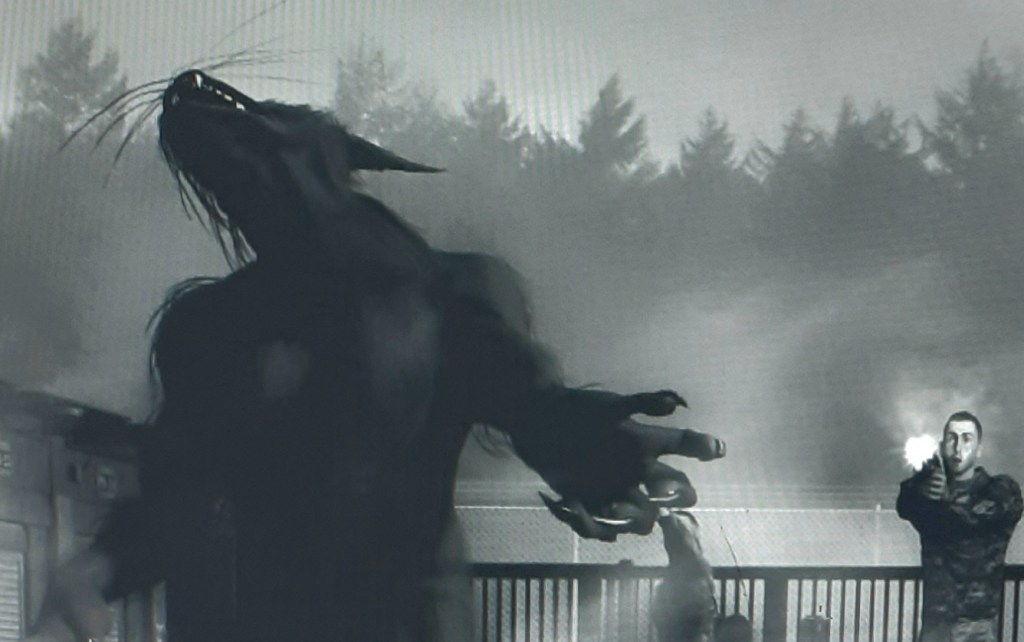
TC: As I research the Megatron, I keep happening across tales of the paranormal. Danny Blundell was inspired to create it after having his own UFO sightings. Later, when it opened, people reported the Megatron itself as a UFO. Then, there were the stories about it being haunted by poltergeists, which had to be exorcised by the local Spiritualists. The neighbouring airfield was said to have its own werewolf in the 1970s. I even found a report of a minotaur spotted in a nearby field.
CV: Yeah, there’s a lot of them around there!
TC: Do you have any interest in the paranormal side of things? I’m a sceptic. I don’t know about you.
CV: I’m a sceptic, but I still find it fascinating, both as a science fiction writer and because I look at those stories as saying something very serious about the psychology of the people involved in them. Why a minotaur? This isn’t Greece. What’s happening in your life that you think you saw a minotaur? How drunk were you in that cow field? But human imagination is infinite in its variety and I am fascinated with that.
I think this is very much Dess’s “Space is boring” thing, that sometimes people grow up reading books and they expect that life is going to be more dramatic than it is. Sometimes, the human brain rebels against regular life and is like, “I’ve got to do something better than this,” and infills experience with that frisson, that sort of shiver, of something more. I think we probably all have moments like that in our lives when we feel something strange or unexplainable. Maybe it’s when you’re very young and everything is unexplainable.
That’s the thing, right? When you’re a kid, everything’s magic if you don’t know magic doesn’t exist yet. Anything is possible. Every child is a scientist, constantly verifying what the world is like. When you’re young and you don’t necessarily know the rules of the universe and maybe you drink a little younger than you should. I can remember things that I thought were very real and now I’m like, well, I was a very sweet little kid.
But why not? Why not tell these stories? As long we’re not making policy decisions based on the minotaur in the field, or nobody’s getting hurt. I think that it’s the impulse towards imagination, and the longing for something more, that has characterised humans as long as we’ve known what humans like to do in their spare time, which for the most part has been to make up stories.
TC: Do you have any plans to visit the UK?
CV: Not right this second, but I would like to in the near future. It’s tough with a six-year-old. I really wanted to make it to Worldcon this year [2024], but I just didn’t feel like I could do that on my own. I could be a good parent at Worldcon or I could be a participant at Worldcon, but I couldn’t do both by myself. I would love to come to the UK again. It’s very hard to tell with a kid, but I would love to, and they’re getting to an age where it will be enjoyable to come.
I’m really pleased to have been able to include something like the Megatron in this, and I will always feel nothing but affection towards it whenever I see it talked about online. I’m super interested to see, once it comes out in the UK, if anybody contacts me about having gone to it.
TC: I was really looking forward to seeing it in a movie.
CV: Haha. You may see it in an animated series.
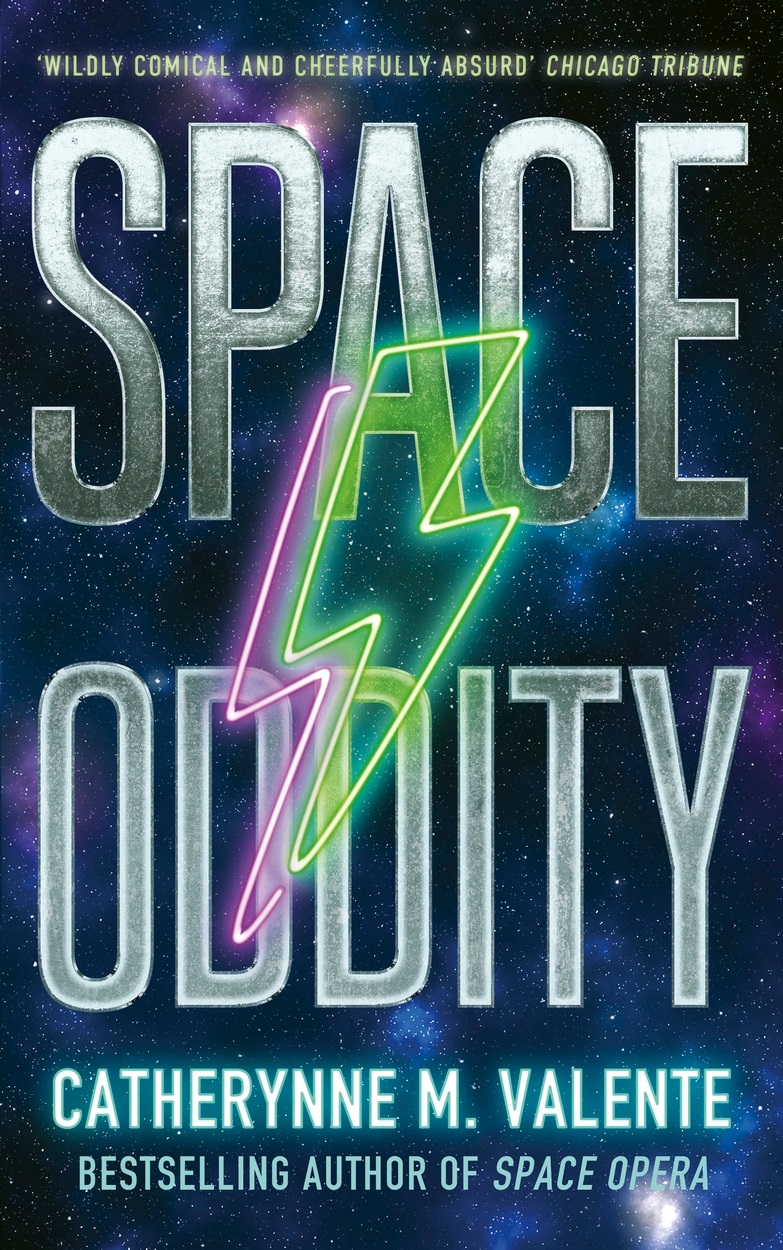
Space Oddity was released on 9th January 2025 in the UK.



 Eccentric Orbits: Collected Writing from Tony Conn
Leave a comment